
Hand Painting on Leather
Hand painting is the most expressive way to decorate leather and the hardest to get right. At Corino Industries, our staff artists apply flexible, pigment-rich paints directly to finished hides, producing artwork that moves with the leather instead of cracking away from it. Every piece is painted, sealed and flex-tested by hand before it leaves our facility in Sialkot, Pakistan. We work with fashion labels, motorcycle brands, custom apparel studios, boutiques and corporate gifting clients across North America, Europe, Australia and the Gulf. Whether you need one hand painted leather jacket for a client commission or a 300-piece capsule run, the process, the pigments and the quality control stay the same.
What Is Hand Painting on Leather?
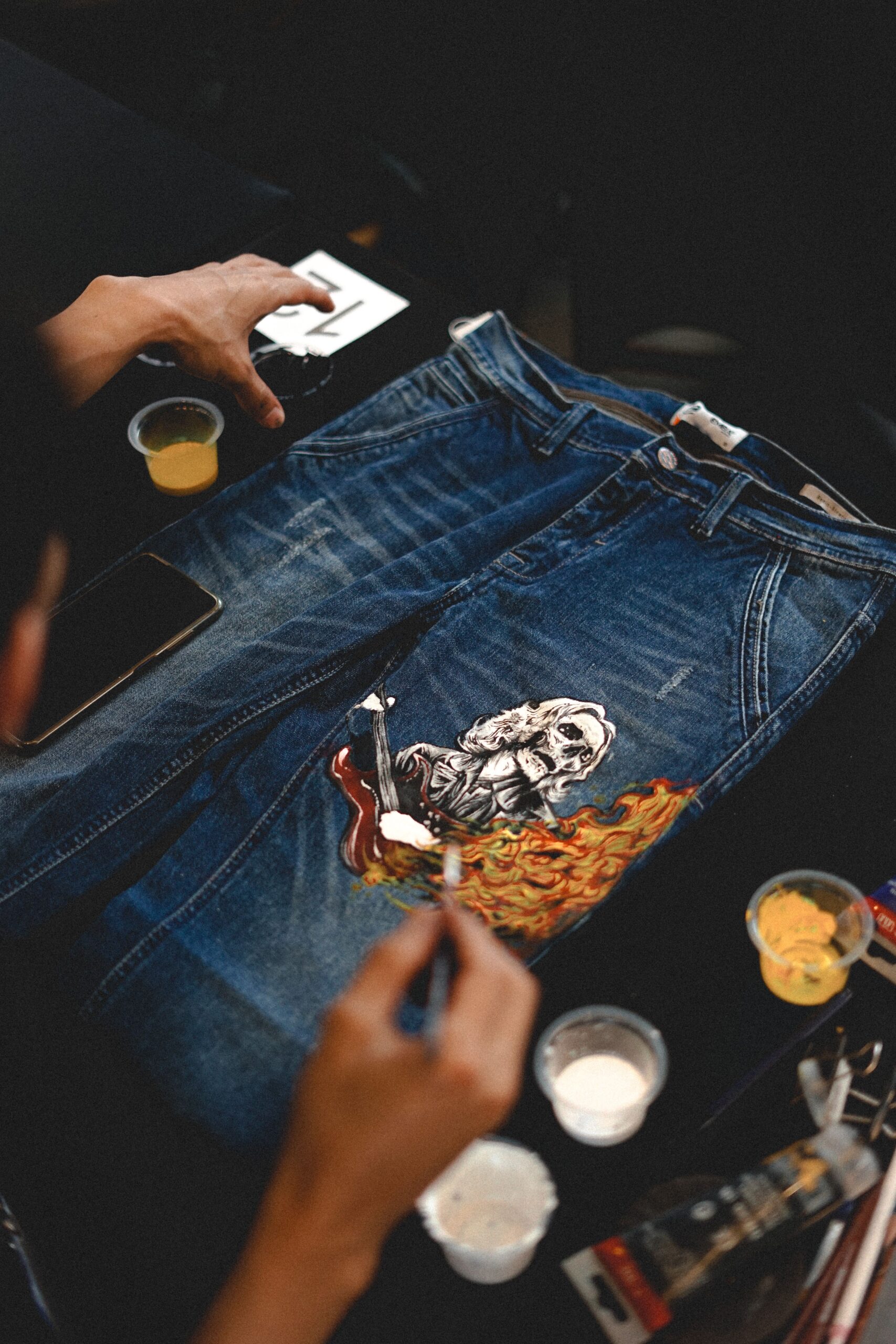
Hand painting on leather is the application of specialist leather paint an acrylic-based, flexible pigment to the surface of a tanned hide using brushes, sponges and airbrushes. Unlike printing or embossing, nothing is transferred, pressed or burned. The artwork exists as a thin, bonded layer of colour sitting on top of a properly prepared leather surface.
The difficulty is chemistry, not artistry. Leather is a living, flexing substrate coated in a manufacturer’s topcoat. Paint applied to an unprepared surface will sit on that topcoat like paint on glass and peel off within weeks. Correct hand painting on leather demands surface deglazing, controlled paint viscosity, thin layered coats and a flexible sealant. Skip any one of those steps and the piece fails.
That is the difference between a decorative sample and a production-grade product, and it is the reason clients bring hand painted leather work to a dedicated leather manufacturer rather than a general print shop.
Products We Hand Paint
Hand Painted Leather Jackets
Our largest category. Full back panels, sleeve artwork, collar detailing, and lapel accents on biker, bomber, café racer and varsity silhouettes. Back-panel artwork is painted before final assembly wherever possible, giving artists a flat working surface and a cleaner finish at the seams.
Hand Painted Leather Bags and Totes
Front panels, gussets and flaps on totes, messenger bags, backpacks and clutches. Bags see high abrasion, so we specify a heavier topcoat and recommend painting away from base corners and strap anchor points.
Hand Painted Leather Accessories
Belts, wallets, card holders, watch straps, keyrings, patches and journal covers. Small-format work suits fine detail, monograms and miniature illustration — ideal for corporate gifting and limited drops.
Hand Painted Falconry and Equestrian Leather
Falconry gloves, hoods, bags and equestrian tack. Traditional motifs, heraldry and Arabic calligraphy are frequently requested by our Gulf clients, and we paint them to specification.
Hand Painted Leather Footwear and Panels
Sneaker panels, boot shafts and cut leather panels supplied for downstream assembly by your own manufacturer.
Our Hand Painting Process
Design Consultation & Artwork Approval
Every project begins with your design brief — a logo, illustration, mural concept, or reference image. Our design team converts this into a leather-ready artwork proof, adjusted for scale, placement, and leather grain compatibility. Buyers review and approve digital mockups before production begins.
Leather Preparation
The jacket panels are cut and assembled first, then the leather surface is cleaned, deglazed, and lightly buffed to ensure the paint adheres properly and evenly. Preparation is critical — this is the step that determines whether the artwork will crack, peel, or fade over time.
Base Coat & Outline
Artisans apply a leather-specific base coat, followed by hand-sketched or stenciled outlines directly onto the jacket. For repeat/bulk orders, we use approved stencils to maintain design consistency across large production runs.
Hand-Painting & Detailing
Skilled painters apply the artwork in layers using flexible, leather-grade acrylic or airbrush paints designed to move with the material rather than crack. Fine detailing, shading, and highlights are added by hand in this stage — the most time-intensive part of the process.
Heat-Setting & Curing
Once painted, jackets go through a controlled heat-setting process. This cures the paint into the leather fibers, improving flexibility, wash resistance, and long-term durability against cracking or fading.
Quality Inspection & Finishing
Each jacket is inspected for color accuracy, edge cleanliness, paint adhesion, and overall finish before final assembly (linings, hardware, zippers) is completed and the jacket is packed for export.
Leather Painting Techniques We Use
Different surfaces and different design languages demand different approaches. Corino’s studio works across several established leather art painting methods, and often combines them within a single commission.
Acrylic Leather Paint and Airbrush Work
Flexible acrylic leather paints remain the industry standard for wearable pieces. They bond to the surface, flex with the hide and resist cracking through normal wear. For gradients, shading and photorealistic portraiture we combine brushwork with airbrushing, which lays down atmosphere and depth that a brush alone cannot reach.
Dye Painting and Antiquing
Where the client wants the grain to remain visible, we paint with penetrating dyes rather than surface pigments. The colour sinks into the hide instead of sitting on it, producing a translucent, aged finish. Antiquing and hand-rubbed highlights are then applied to bring out contours — a technique particularly suited to vegetable-tanned leather.
Sealing, Finishing and Durability
Painting is only half the work. Each finished piece is sealed with a flexible topcoat that protects against abrasion, UV fading, rain and body oils. Sealed pieces are flex-tested and rub-tested before they leave the facility, because artwork that lifts after a season is a failure regardless of how well it was painted.
Wallets,Belts,Boots and Interior
Monograms on wallets and belts, painted detailing on boots, and bespoke leather artwork for automotive and motorcycle interiors — seats, tank panels and saddlebags.
Frequently Asked Questions
We primarily use flexible acrylic leather paints and penetrating leather dyes, depending on the finish required. Acrylics sit on the surface and allow bold, opaque colour; dyes sink into the hide and preserve the visible grain. Both are sealed with a flexible protective topcoat.
No. Every piece is painted with flexible, leather-specific pigments and sealed with a topcoat designed to move with the hide. Finished items are flex-tested and rub-tested before dispatch to confirm the artwork will withstand normal wear.
Yes. Corino Industries accepts customer-supplied garments and accessories for hand painting, alongside items manufactured in-house. We assess the existing finish first, as some heavily coated leathers require additional surface preparation.
We accept single-piece commissions as well as full production runs. There is no rigid minimum, though pricing per unit improves significantly on batch orders.
A single custom piece typically takes 10–15 working days after artwork approval. Batch orders depend on quantity and complexity; we confirm a firm timeline at the quotation stage.
Yes. Corino Industries exports worldwide with full documentation, serving clients across Europe, North America, the Middle East, Australia and Asia.